Online Workshops

2026

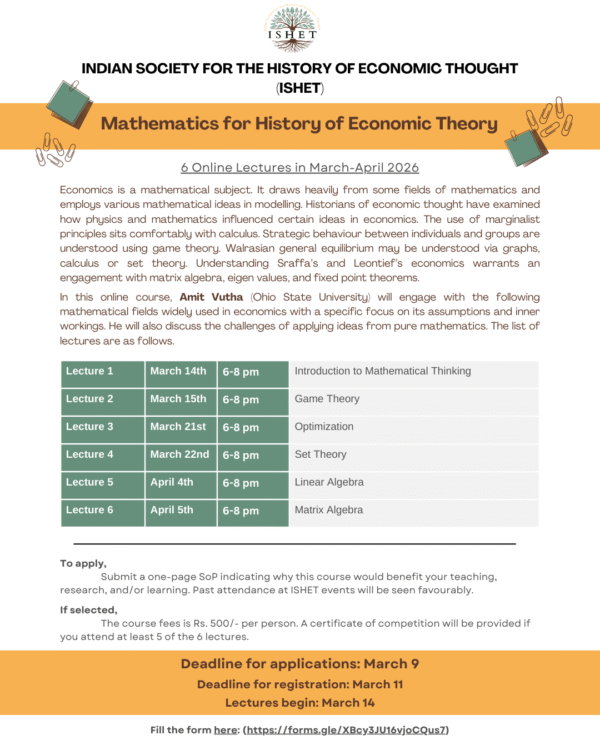
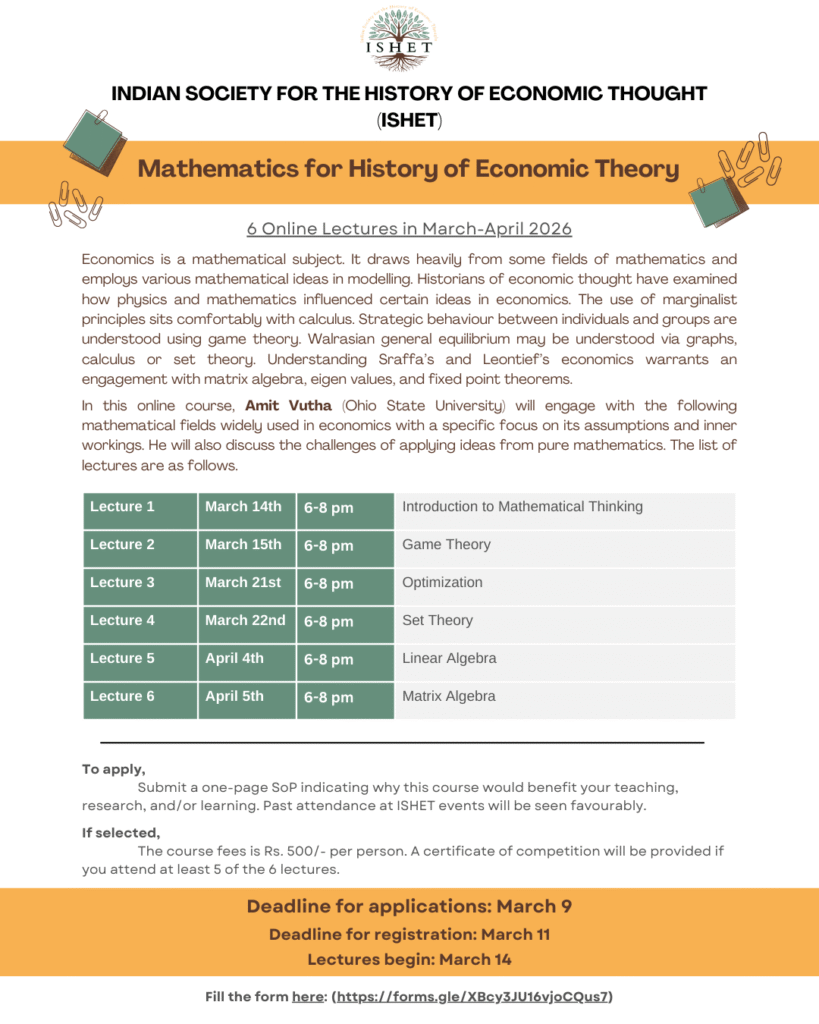
Mathematics for History of Economic Theory: Online Workshop Series

Mathematics for History of Economic Theory

Organised by: Indian Society for the History of Economic Thought (ISHET)

Format: Online Lecture Series

Dates: 14 March to 5 April 2026

Number of Lectures: 6

Course Instructor: Amit Vutha, Ohio State University

Overview: A six lecture online course exploring the mathematical ideas and methods that have shaped the development of economic theory. The course examined the mathematical foundations underlying key areas of economics, with particular attention to their assumptions, applications and limitations.

Lecture Topics:

Introduction to Mathematical Thinking: 14 March 2026

Game Theory: 15 March 2026

Optimization: 21 March 2026

Set Theory : 22 March 2026

Linear Algebra: 4 April 2026

Matrix Algebra: 5 April 2026

Course Fee: Rs 500 per participant

Certificate: Participants attending at least 5 of the 6 lectures were eligible to receive a certificate.

Event Description: The course brought together mathematical concepts commonly used in economics, including calculus, game theory, optimization, set theory and linear and matrix algebra. It also considered how mathematical ideas are translated into economic theory and the challenges involved in applying concepts from pure mathematics to economics.

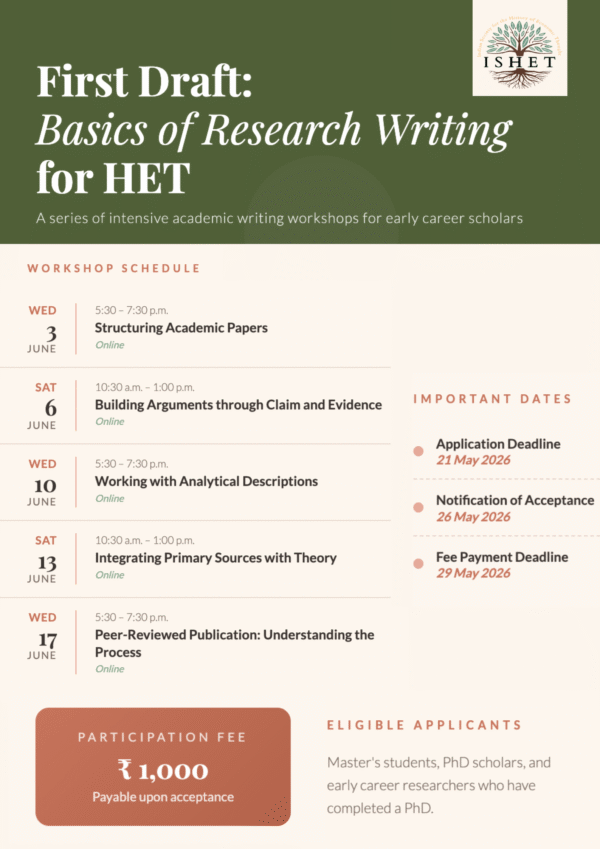
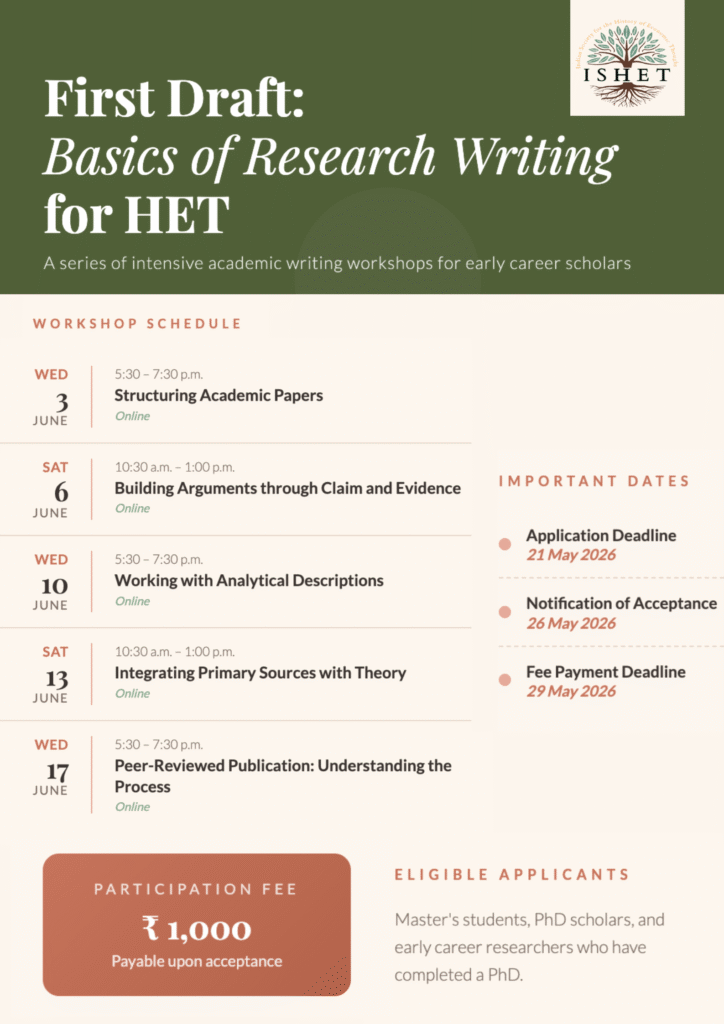
First Draft: Basics of Research Writing for HET

A series of intensive academic writing workshops for early-career scholars, organised by the Indian Society for the History of Economic Thought (ISHET).

Workshop Schedule

3 June 2026: Structuring Academic Papers: 5:30 to 7:30 p.m. | Online

6 June 2026: Building Arguments through Claim and Evidence: 10:30 a.m to 1:00 p.m. | Online

10 June 2026: Working with Analytical Descriptions: 5:3 to 7:30 p.m. | Online

13 June 2026: Integrating Primary Sources with Theory: 10:30 a.m. to 1:00 p.m. | Online

17 June 2026: Peer-Reviewed Publication: Understanding the Process: 5:30 to 37:30 p.m. | Online

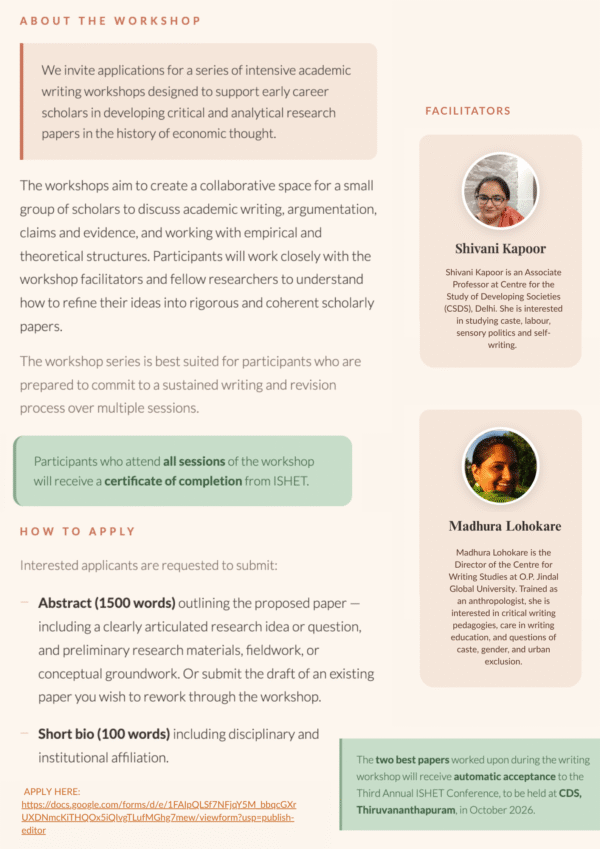
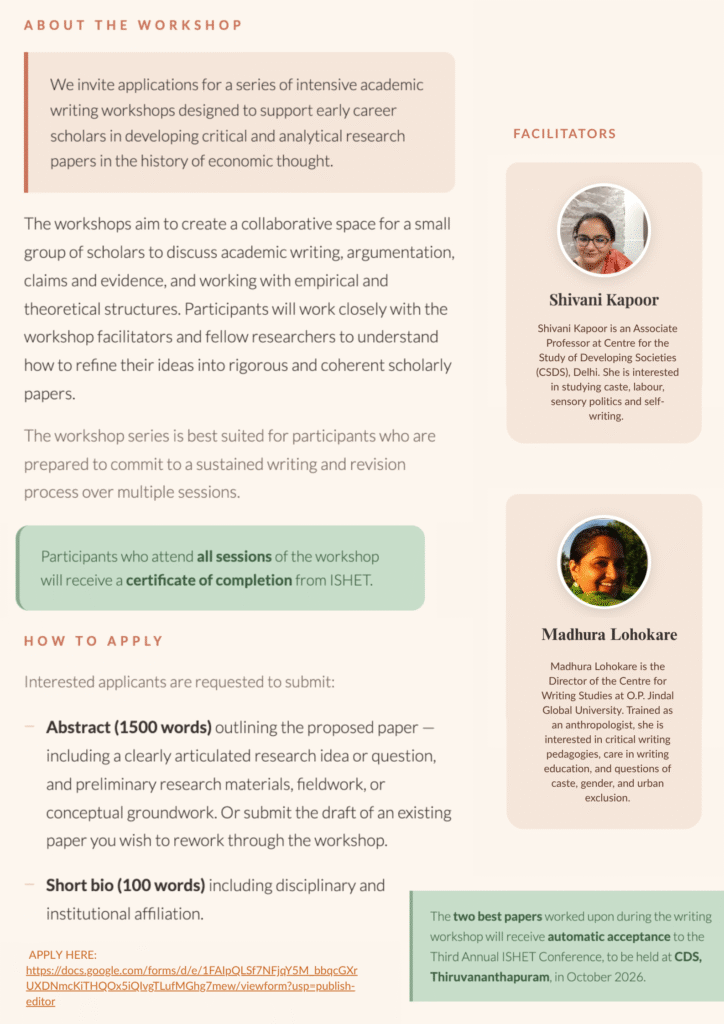
Facilitators:

Shivani Kapoor is an Associate Professor at the Centre for the Study of Developing Societies (CSDS), Delhi. Her research interests include caste, labour, sensory politics and self-writing.

Madhura Lohokare is the Director of the Centre for Writing Studies at O.P. Jindal Global University. Trained as an anthropologist, she is interested in critical writing pedagogies, care in writing education, and questions of caste, gender and urban exclusion.

Participation Fee: Rs 1,000, payable upon acceptance.

Eligible Applicants: Master’s students, PhD scholars, and early-career researchers who have completed a PhD.

Important Dates:

  • Application deadline: 21 May 2026
  • Notification of acceptance: 26 May 2026
  • Fee payment deadline: 29 May 2026

The application form was provided through Google Forms.

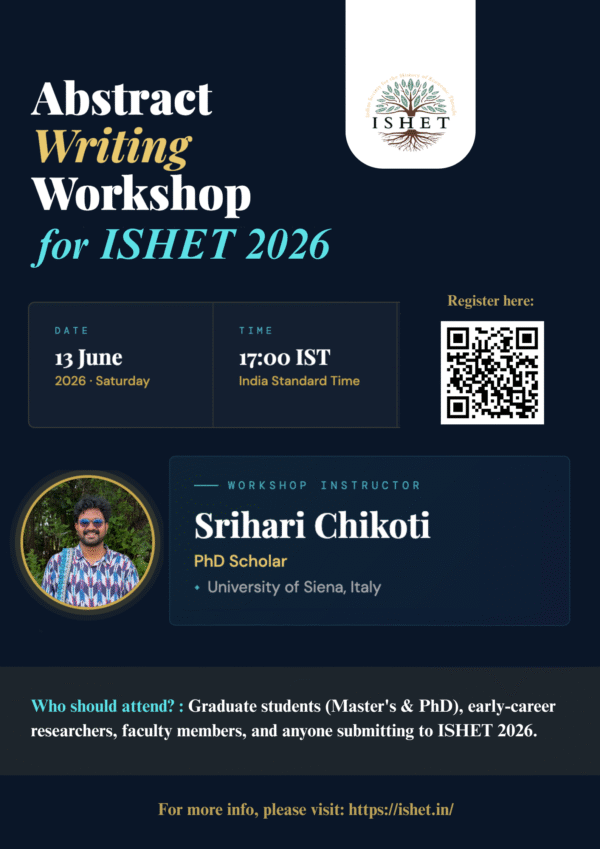
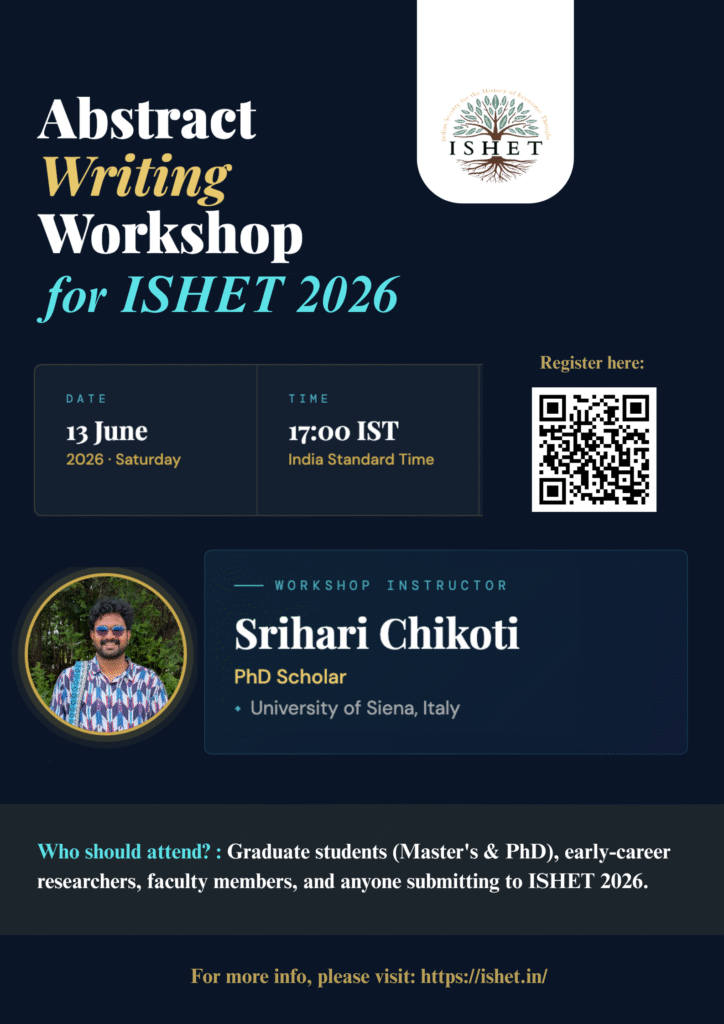
Abstract Writing Workshop for ISHET 2026

A workshop on abstract writing for students and researchers preparing submissions for ISHET 2026.

Date: 13 June 2026, Saturday

Time: 5:00 PM IST

Format: Online

Workshop Instructor: Srihari Chikoti, PhD Scholar, University of Siena, Italy

Who should attend? Graduate students (Master’s & PhD), early-career researchers, faculty members, and anyone submitting to ISHET 2026.

Organised by: Indian Society for the History of Economic Thought (ISHET)

Registration: Participants could register through the registration link/QR code provided in the event announcement.

2025

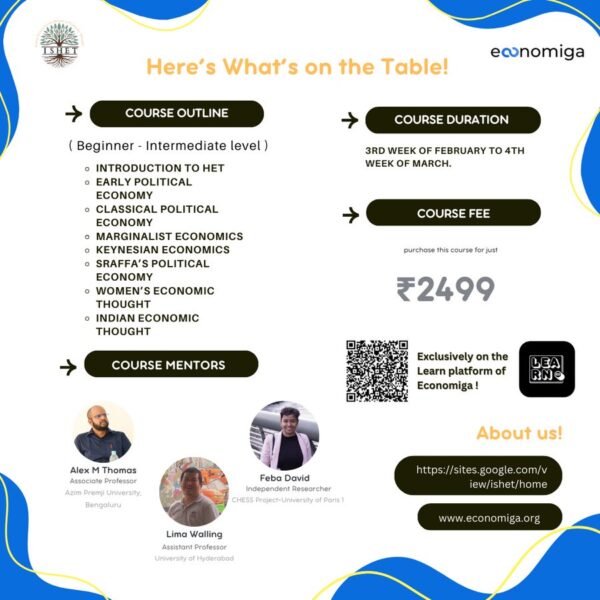
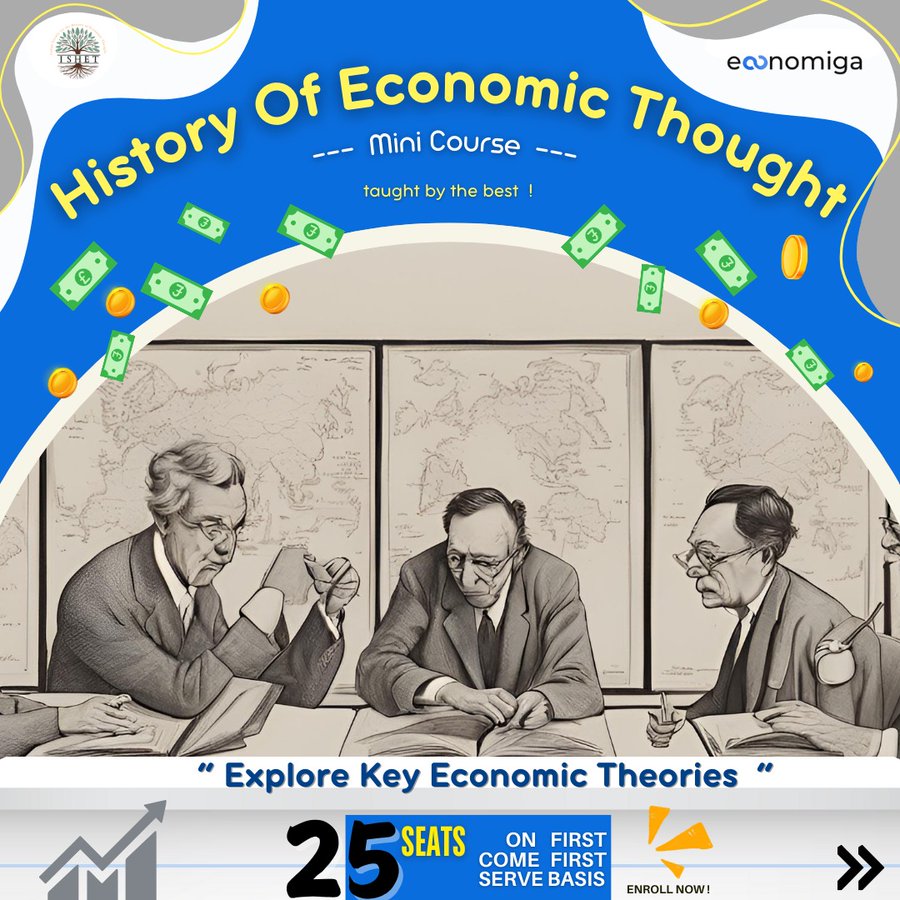
History of Economic Thought Mini Course

History of Economic Thought Mini Course

Organised by: Indian Society for the History of Economic Thought (ISHET), in collaboration with Economiga.

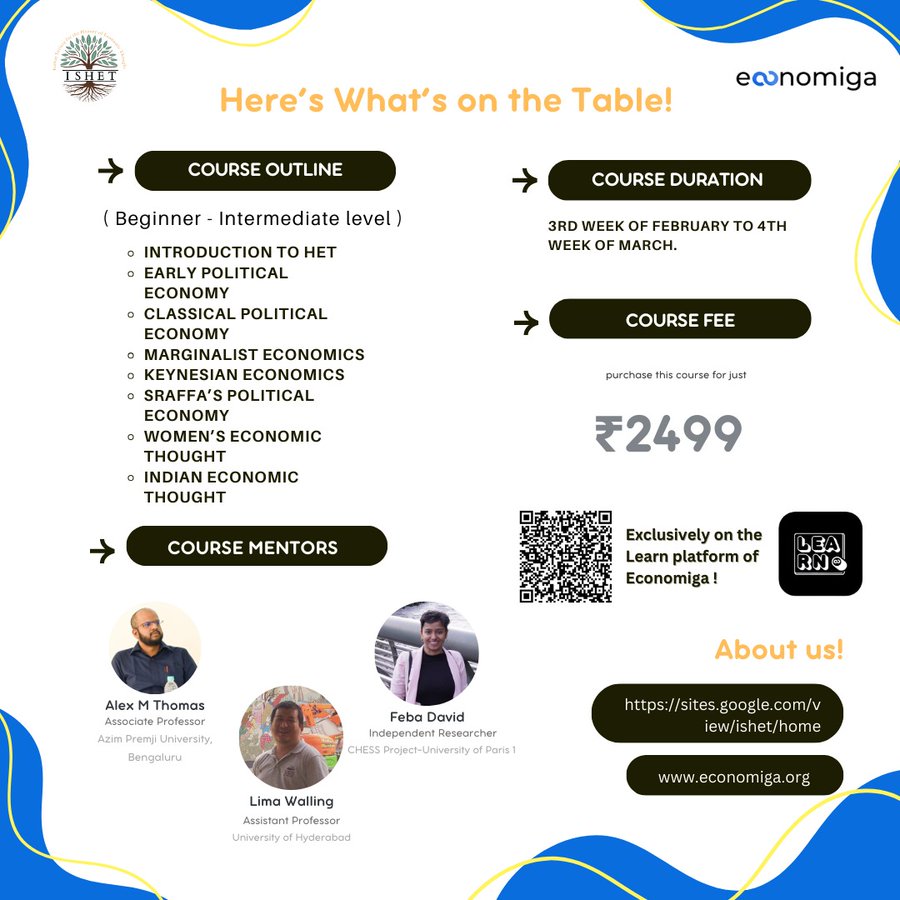
Course Level: Beginner to Intermediate

Course Duration: 3rd week of February to 4th week of March

Course Fee: Rs 2,499

Course Outline:

  • Introduction to History of Economic Thought (HET)
  • Early Political Economy
  • Classical Political Economy
  • Marginalist Economics
  • Keynesian Economics
  • Sraffa Political Economy
  • Women Economic Thought
  • Indian Economic Thought

Course Mentors

  • Alex M. Thomas, Associate Professor, Azim Premji University, Bengaluru
  • Feba David, Independent Researcher, CHESS Project, University of Paris 1
  • Lima Walling, Assistant Professor, University of Hyderabad

Course Format: Online, exclusively through the Economiga learning platform.

About the Course:

The mini course provides an introduction to the History of Economic Thought, covering major schools, approaches and traditions in economics, from early political economy and classical economics to Keynesian, Sraffian, feminist and Indian economic thought.

Registration: The course was available for enrolment through the Economiga learning platform

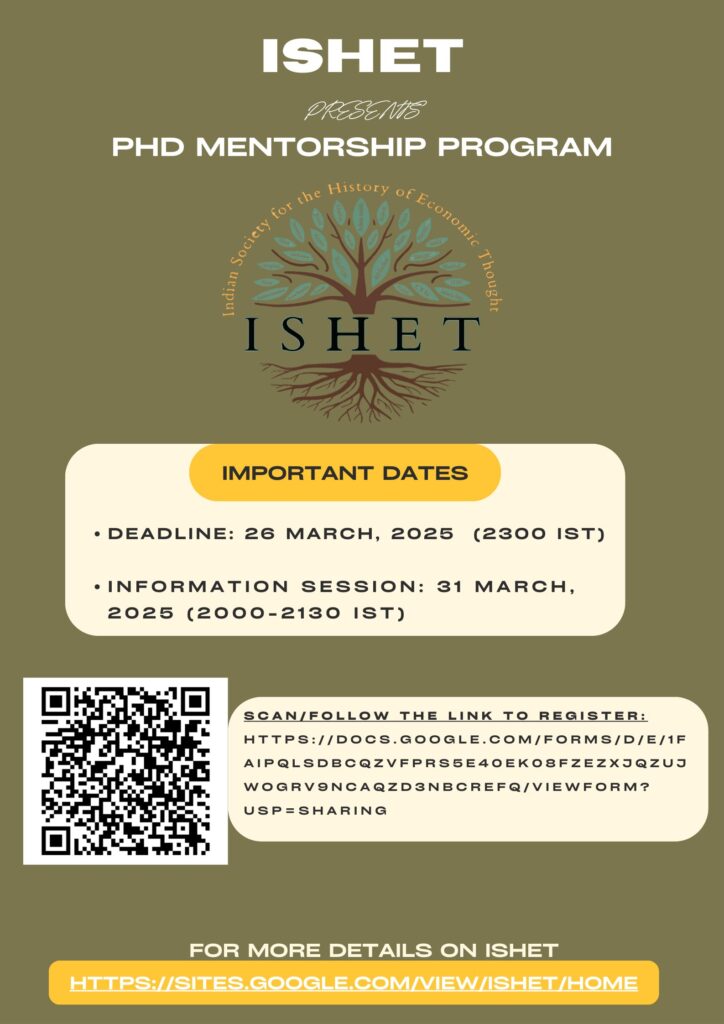
ISHET PhD Mentorship Program

Organised by: Indian Society for the History of Economic Thought (ISHET)

Program: PhD Mentorship Program

Important Dates:

  • Application deadline: 26 March 2025, 23:00 IST
  • Information session: 31 March 2025, 20:00 to 21:30 IST

Registration: Interested participants could register through the Google Form provided in the event announcement.

More Information: Further details about ISHET were available through the ISHET website.

2024

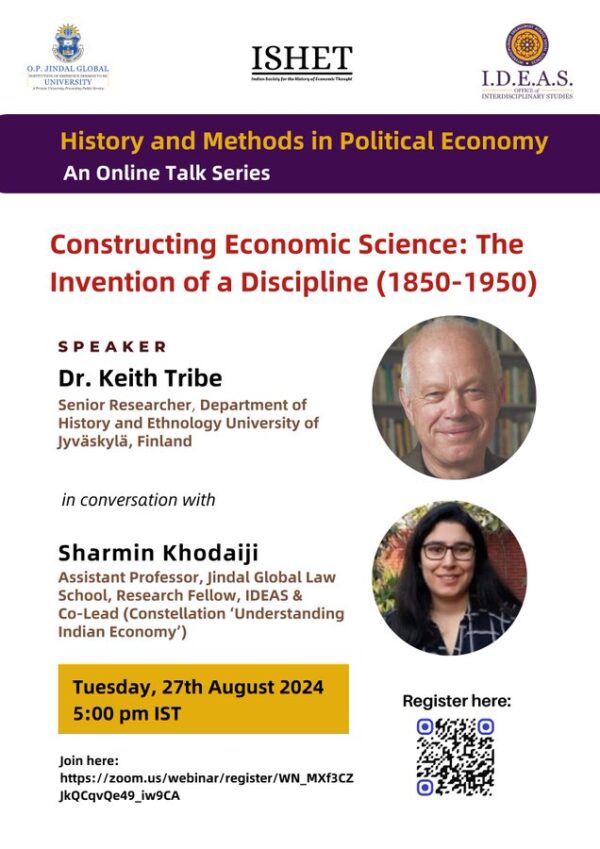
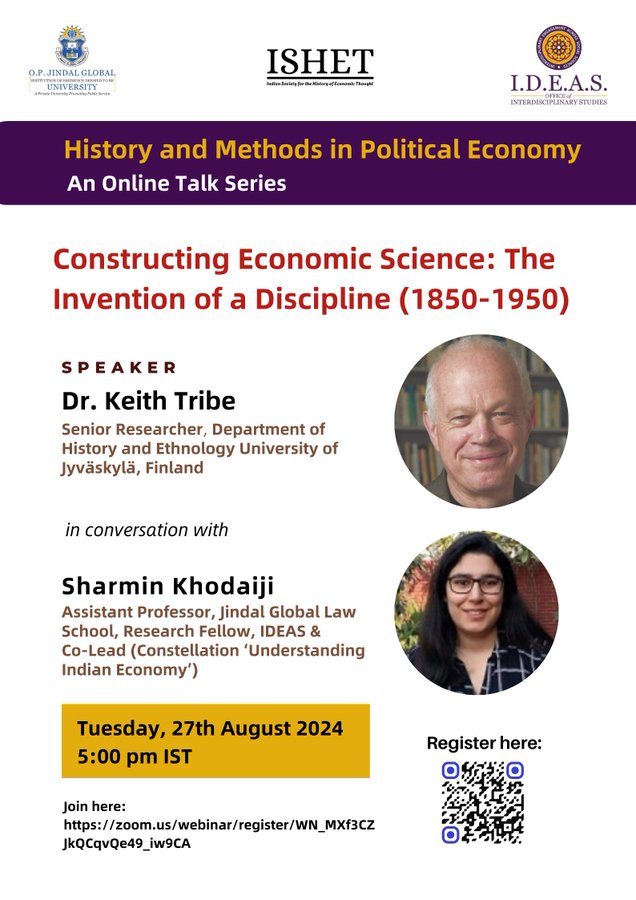
History and Methods in Political Economy: An Online Talk Series

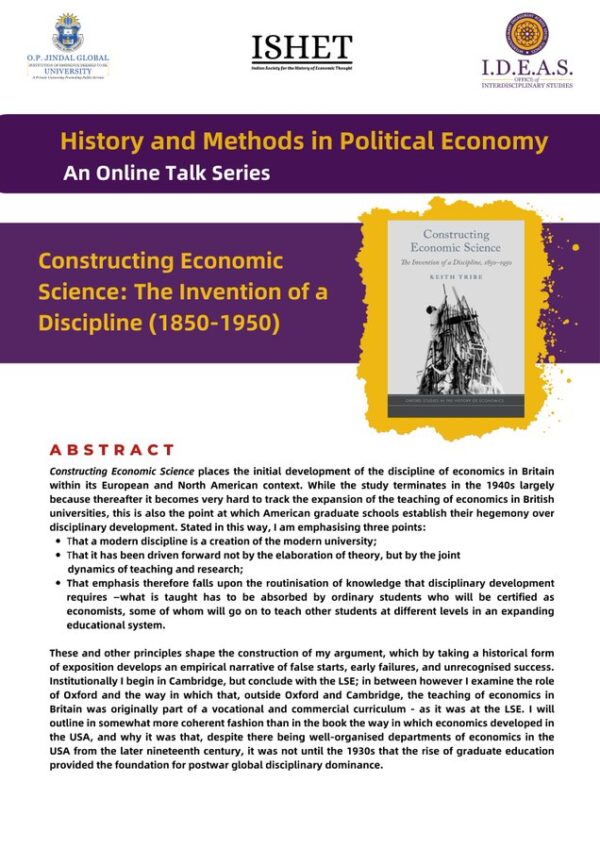
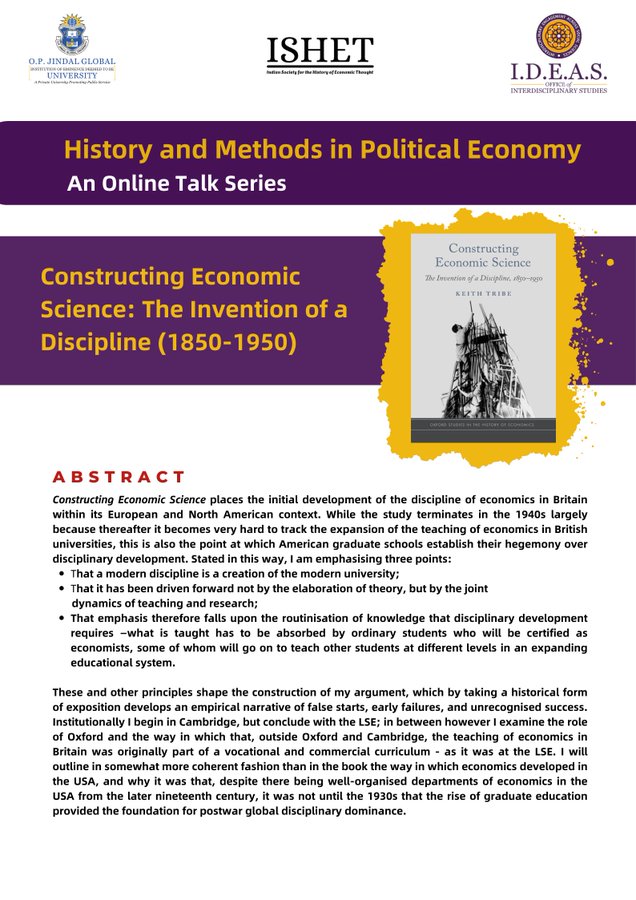
Constructing Economic Science: The Invention of a Discipline (1850 to 1950)

Organised by: O.P. Jindal Global University, Indian Society for the History of Economic Thought (ISHET), and I.D.E.A.S. (Interdisciplinary Studies)

Series: History and Methods in Political Economy: An Online Talk Series

Speaker: Dr. Keith Tribe, Senior Researcher, Department of History and Ethnology, University of Jyvaskyla, Finland

In conversation with: Sharmin Khodaiji, Assistant Professor, Jindal Global Law School; Research Fellow, IDEAS and CoLead

Date: 27 August 2024

Time: 5:00 PM IST

About the Talk: The talk examined the initial development of economics as a discipline in Britain within its European and North American context, tracing the expansion of economics teaching in British universities and the emergence of American graduate schools and their influence over disciplinary development. The discussion focused on the development of modern economics as a creation of the modern university, driven not only by theoretical elaboration but also by the joint dynamics of teaching and research. It also explored the routinisation of knowledge required for disciplinary development and the role of universities such as Oxford and Cambridge in shaping the teaching of economics in Britain.